
BREAKING: Eighth Study Confirms mRNA Shots Increase Infection Risk
New study of 1,745 healthcare workers finds mRNA boosters raise risk of influenza-like illness by up to 70% and increase workdays lost by 50%.

A major Swiss study of 1,745 healthcare workers, published in Nature’s Communications Medicine, found that recent COVID-19 booster shots were linked to a significantly higher risk of illness and missed work compared to the unvaccinated.
The illness measured was Influenza-Like Illness (ILI) — sudden onset of fever (≥38°C or feeling feverish) plus at least one respiratory symptom (cough, sore throat, runny nose, loss of smell) within 7 days.
National surveillance showed that during the study period, ~21% of ILI cases were COVID-19, ~20% were influenza, and the rest were caused by other respiratory viruses — meaning boosters increase risk of infection from multiple different pathogens:
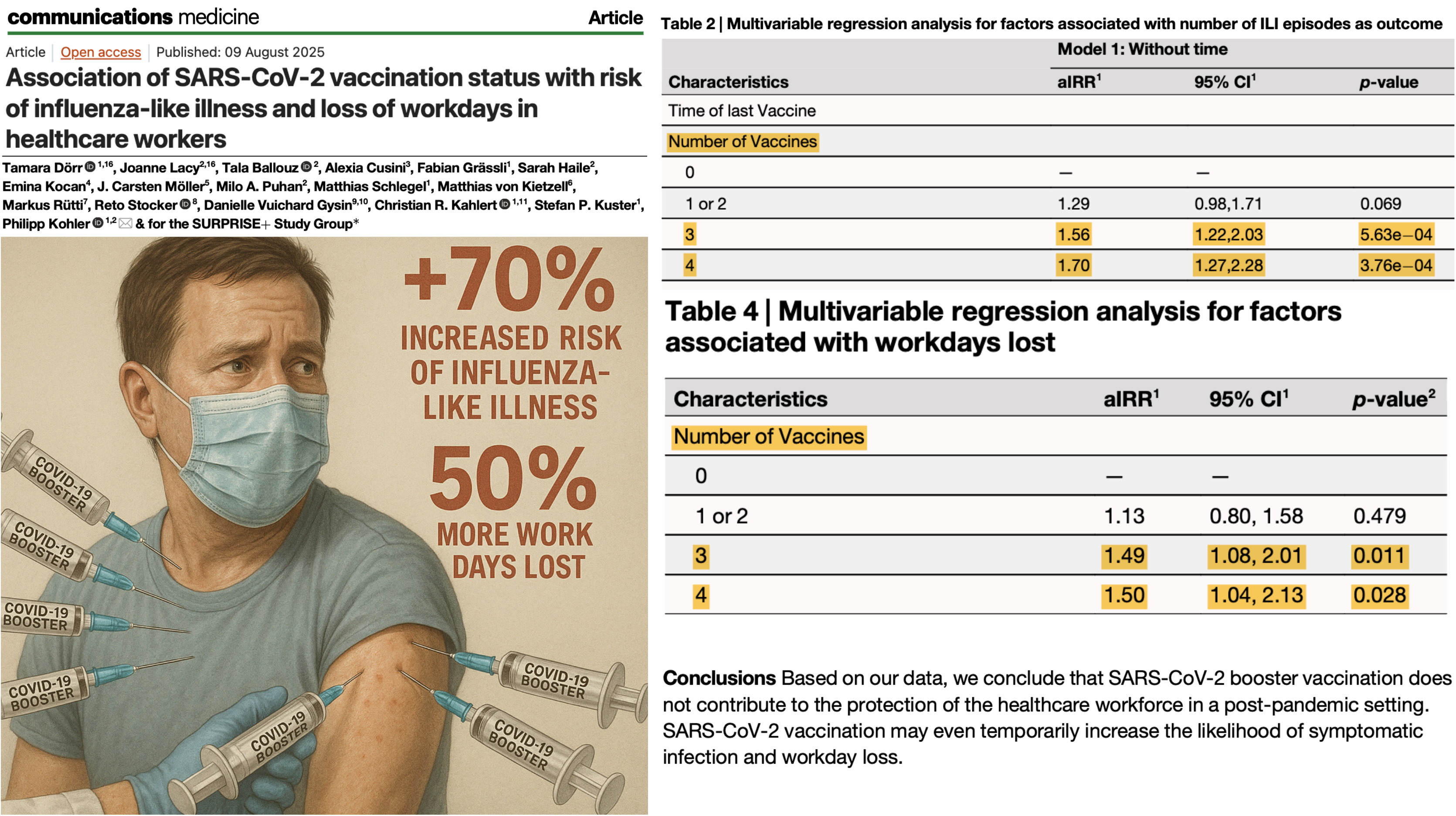
Higher Risk of Illness After Boosters
3 doses: aIRR 1.56 (95% CI 1.22–2.03) — 56% higher risk of ILI vs. unvaccinated.
4 doses: aIRR 1.70 (95% CI 1.27–2.28) — 70% higher risk.
More recent boosters: aIRR 1.32 (95% CI 1.07–1.62) — strongest effect soon after vaccination.
More Sick Days After Boosters
3 doses: aIRR 1.49 (95% CI 1.08–2.01) — 49% more workdays lost.
4 doses: aIRR 1.50 (95% CI 1.04–2.13) — 50% more workdays lost.
Robust Even After Adjusting for Confounders
Inverse probability weighting confirmed the association: recent boosters aIRR 1.26 (95% CI 1.12–1.43).
These Findings Corroborate SEVEN Other Studies Showing COVID-19 “Vaccines” Increase Infection Risk
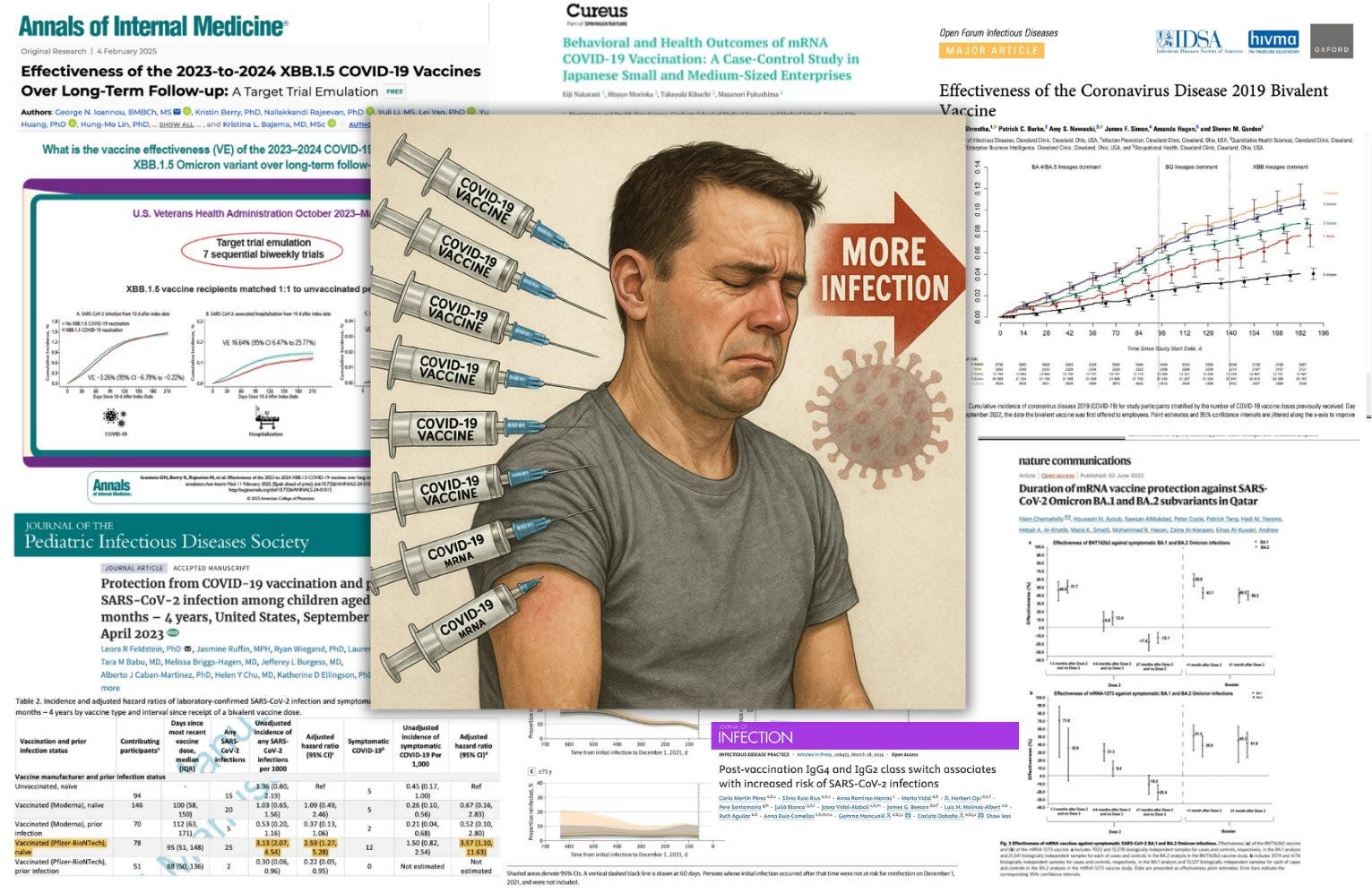
Shrestha et al. (Cleveland Clinic) – COVID-19 risk increased with dose count:
1 dose → +107% risk (HR 2.07, 95% CI: 1.70–2.52)
≥3 doses → +253% risk (HR 3.53, 95% CI: 2.97–4.20)
Feldstein et al. (CDC) – Pfizer-vaccinated children without prior infection:
+159% risk of infection (HR 2.59, 95% CI: 1.27–5.28)
+257% risk of symptomatic COVID-19 (HR 3.57, 95% CI: 1.10–11.63)
Perez et al. – More mRNA doses → IgG4 antibody levels ↑ 11× → 1.8× higher infection risk.
Ioannou et al. – Vaccine effectiveness against infection was -3.26% (95% CI: -6.78% to -0.22%) — meaning higher infection rates in the vaccinated group.
Nakatani et al. – Vaccinated individuals had +85% infection odds vs. unvaccinated (OR 1.85, 95% CI: 1.33–2.57).
Eythorsson et al. – 2+ doses → +42% reinfection risk vs. ≤1 dose (95% CI: 1.13–1.78).
Chemaitelly et al. – Effectiveness against Omicron BA.1 & BA.2 infections turned negative within 7 months:
Pfizer: 46.6% → -17.8%, 51.7% → -12.1%
Moderna: 71.0% → -10.2%, 35.9% → -20.4%
These data make it clear: mRNA technology for infectious diseases is acting as an infection promoter. It’s time to return to common-sense public health principles and remove this dangerous gene-transfer platform from the market.
Epidemiologist and Foundation Administrator, McCullough Foundation
www.mcculloughfnd.org
Please consider following both the McCullough Foundation and my personal account on X (formerly Twitter) for further content.